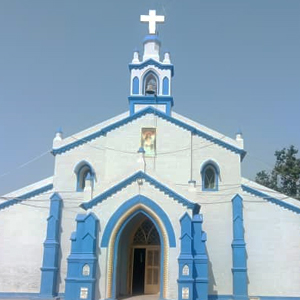


The history of the National Marian Shrine and Church of St. Mary and St. Joseph in Mariamabad is closely tied to the foundation and development of the village itself as one of the oldest Catholic settlements in Pakistan.
Summary of its history and key dates:
- Founding of Mariamabad (1892-1893)
1892: Belgian Capuchin missionaries, led by Bishop Emmanuel Van Den Bosch, purchased 150 acres of government land in the Sialkot District (now Sheikhupura District) of Punjab. The purpose was to establish a Christian settlement for new converts facing oppression.
1893: The first three Christian families and three priests moved to the land, which was named Mariamabad (“City of Mary”). This movement is sometimes compared to the Biblical Exodus in local Christian history.
2. Establishment of the Church and Grotto (1898-1927)
December 8, 1898: The Church of Saint Mary and Saint Joseph was formally established by the Belgian Capuchins in the village.
1927: The original Marian grotto, featuring a large statue of the Virgin Mary, was built by a missionary, Fr. Oscar. This grotto became the central focus of Marian devotion.
3. Development as a National Shrine and Pilgrimage Center
1949: Mariamabad was officially designated as the National Marian Shrine of Pakistan.
1949: Fr. Emmanuel Asi promoted and led the first formal three-day annual pilgrimage (ziyarat-e-maqadas Mariam), held around the Feast of the Nativity of Mary (September 8).
1950s onwards: The site developed into a major pilgrimage center, attracting hundreds of thousands, and sometimes over a million, pilgrims annually.
Strategic Goal: The pilgrimage was deliberately designed by the missionaries as a Christian alternative to local Muslim and Hindu festivals (mela or yatra) to help new converts solidify their Catholic faith and prevent a relapse into older practices.me to WordPress. This is your first post. Edit or delete it, then start writing!


Hi, this is a comment.
To get started with moderating, editing, and deleting comments, please visit the Comments screen in the dashboard.
Commenter avatars come from Gravatar.